
The Robot Portrait of the Corrupt Official

In 2015 and the first 9 months of 2016, the value of the damage caused by corruption-related offences and organised crime offences exceeded MDL 8.5 billion. Most offenders convicted of taking bribes are from the public sector, among both women and men. The profile of corrupt offenders, that is, those who took bribes, is clearly dominated by men, at 87% for 2013-2015; one explanation may be the inequality of career opportunities for women, especially in the public sector. Even though it is a rather strange practice for the employer, during the criminal investigation, to provide positive references for the accused who took bribes in the position they held, a practice that is fairly widespread and could serve as an indicator that managers are by no means free of sin either, it is nevertheless noticeable that accused women are given a positive reference from the workplace more often than men. At the same time, only in the case of men do people who are not facing criminal law for the first time end up in the dock, with repeat offending in corruption offences established in some cases. Thus, the vast majority of men who take bribes are aged up to 40, whereas women's predisposition in this respect increases after the age of 50. A possible explanation for this difference may be the difference in career opportunities: younger women have fewer opportunities than men, so they do not hold positions in which they could exercise influence that can be traded in an act of corruption. Another possible explanation may be that men are inclined to take more risks during the active period of forming and supporting a family with minor children, whereas women are much more cautious while raising minor children and do not expose themselves to the risk of being held criminally liable. On the other hand, at the age when their children have already reached adulthood, women are more inclined to become involved in acts of corruption. The data presented for 2013-2015 show that the predominant place where the offence is committed is the workplace, at 51% for men and 69% for women, with the street in second place for 26% of men and 19% of women. As regards the object of corruption offences, there are no gender differences: both men and women prefer money (94-95%) or, in the remaining cases, a combination of goods and money. As for the value of the bribe, men demand larger sums, the maximum value being about EUR 60 thousand (equivalent to MDL 1.2 million), whereas women seem to be content with smaller sums, the maximum value being about half of what men demand. Interestingly, men end up reducing the requested value of the bribe by 18% during negotiation, whereas women are ready to make reductions of up to 13%.
Other infographics & videographics
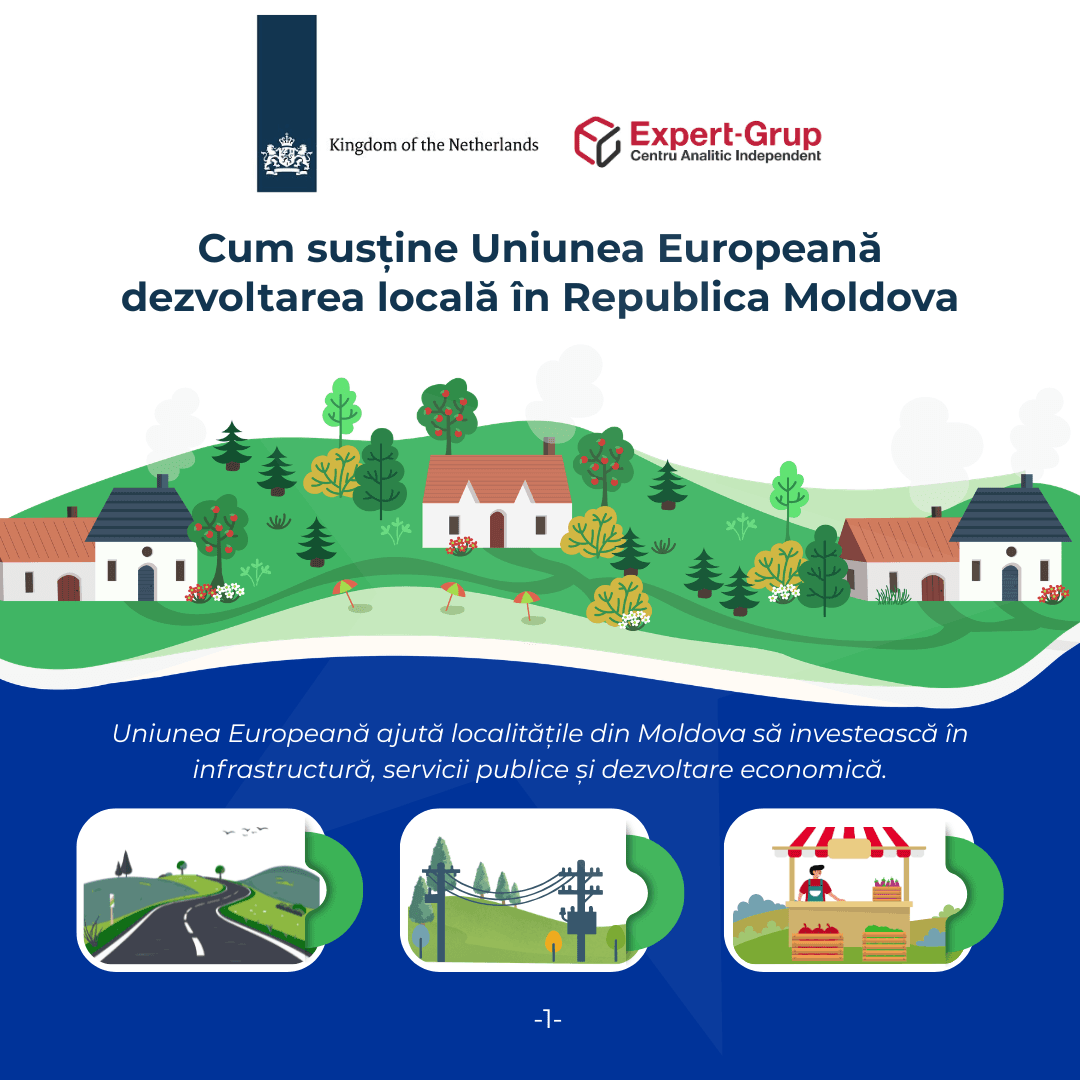 Infographic
How the European Union Supports Local Development in the Republic of Moldova
21 July 2026
 Infographic
What should the next Government do to relaunch the economy?
8 July 2026
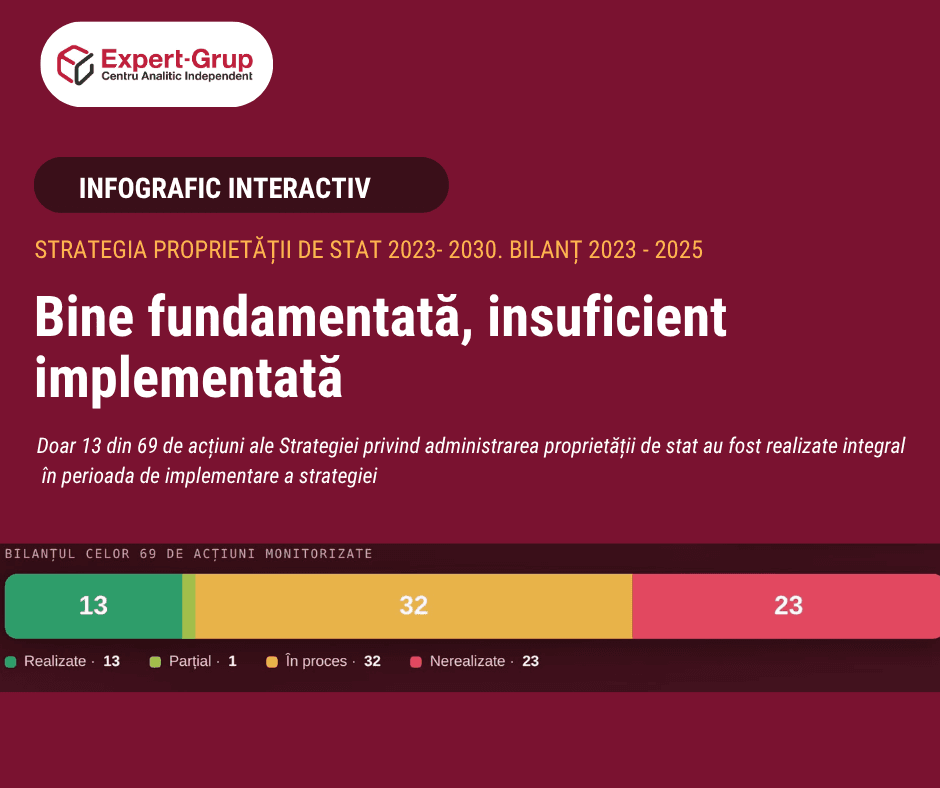 Infographic
Monitoring the Implementation of the State Property Management Strategy in the Field of State-Owned Enterprises and Joint-Stock Companies
6 July 2026
 Infographic
How Should We Reorganise the Public Property Agency?
29 June 2026