
(INFOGRAPHIC) The Economic Cost of Gender Inequalities in the Republic of Moldova – How Does It Affect Us as a Society?
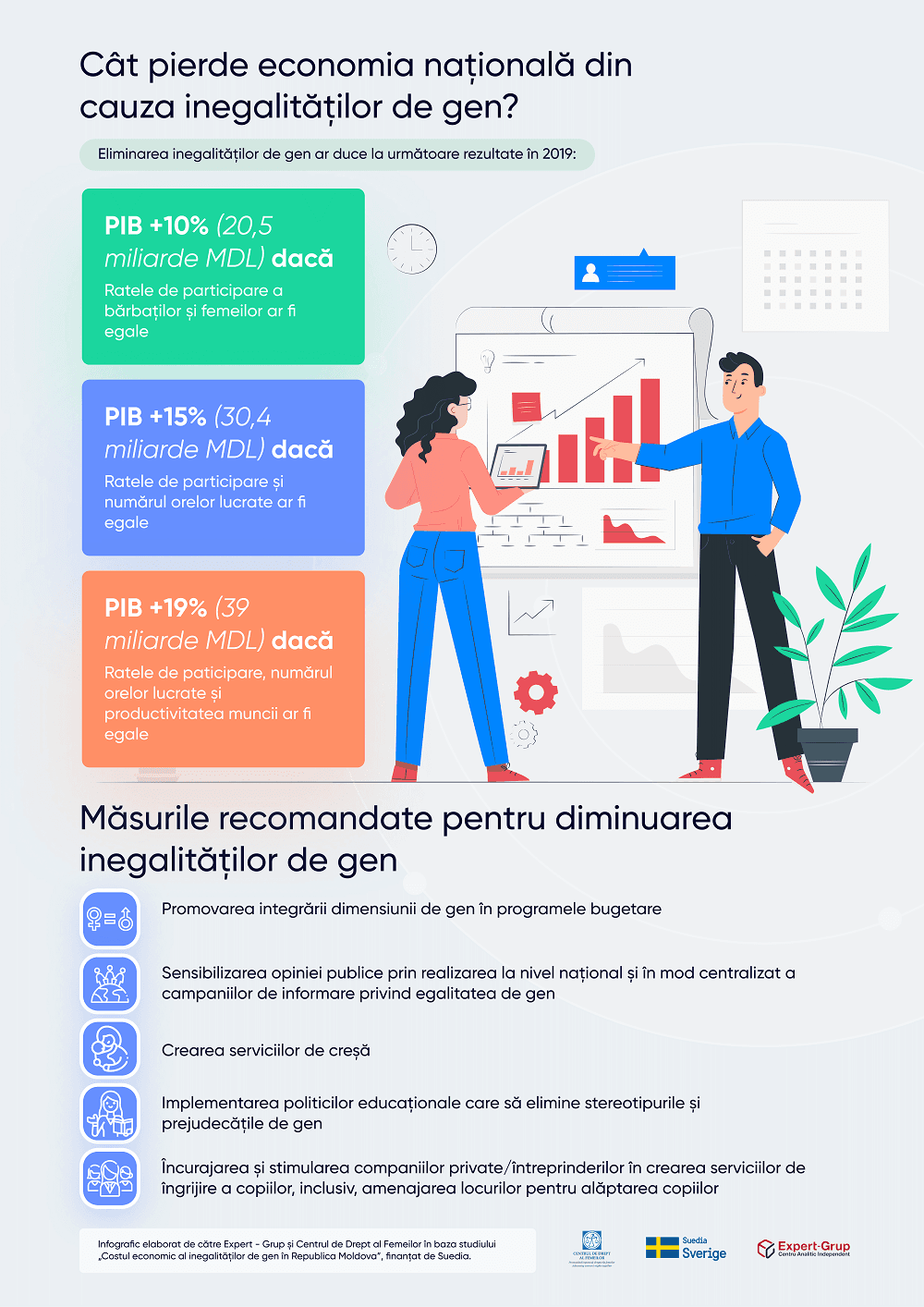
Gender inequality in the Republic of Moldova costs the state budget several tens of billions of lei. If the economic inequities between women and men were eliminated, our country's GDP would grow by up to 20%, or by approximately MDL 39 billion – these are some of the conclusions of the

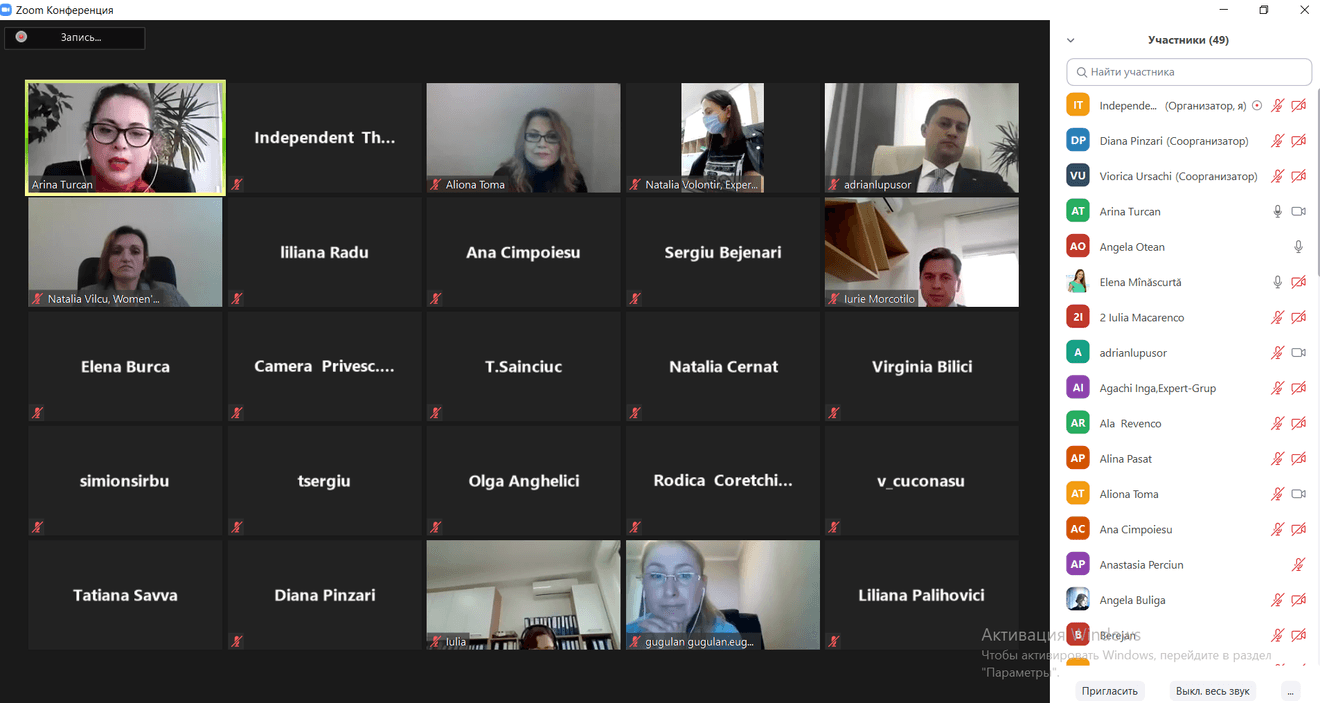
Gender inequality in the Republic of Moldova costs the state budget several tens of billions of lei. If the economic inequities between women and men were eliminated, our country's GDP would grow by up to 20%, or by approximately MDL 39 billion – these are some of the conclusions of the study “The Economic Cost of Gender Inequalities in the Republic of Moldova”, conducted by Expert-Grup in partnership with the Centre for Women's Rights and funded by Sweden. The study was presented today, 13 October, at an online event.
“For economists, inequality is by definition a suboptimal allocation of resources, which leads to economic and social losses. In the case of gender inequality, unfortunately, we have significant losses year after year. We are talking about tens of billions of lei that the economy of the Republic of Moldova loses for the simple reason that we do not have a balanced rate of gender equality”, said Adrian Lupușor, executive director of the Independent Think Tank “Expert-Grup”.
According to the study, women face difficulties in returning to the labour market after childbirth. The challenges relate to the way policies in this area are designed, the insufficiency of quality nursery-type services, the lack of flexibility on the part of employers, as well as tradition, cultural specifics and gender prejudices, which lead women to give up professional activity. According to data from the National House of Social Insurance, as of 1 January 2020, among insured persons, 39,458 mothers and 7,136 fathers were on partially paid childcare leave and received a monthly childcare allowance.
“The development and effective implementation of measures to reconcile professional and family life must become a priority for the national authorities. The lack of such measures affects women first and foremost, who are often forced to give up their jobs and professional development. Moreover, the difficulty of returning to the labour market deepens women's financial vulnerability and has a direct impact on the country's economy”, stated Natalia Vîlcu, executive director of the CWR and co-author of the study.
The authors of the study consider that national legislation contains no provisions that would motivate the mother and father to share childcare leave between them, and if they decide to use nursery-type services, women encounter prejudice and criticism. “...In our culture, mothers who send their children to nursery at an early age are labelled as less good mothers. I sent my elder child to a nursery in another locality at the age of 1 year and 8 months, because I had gone back to work and most of my relatives criticised me. In my view, many mothers want to use nursery services, if they existed, but because of social pressure they give in and give up on professional fulfilment”, said one of the people interviewed for this study.
In 2019, there were two nurseries in the Republic of Moldova, located only in urban areas. Given that 32.6 thousand children were born in 2018 and 34.1 thousand in 2017, the number of early childhood education institutions and available places is clearly insufficient.
“Gender inequality is a constraint on the progress of any society, because it limits the opportunities of half of its population. When women are constrained from reaching their full potential, that potential is lost for the whole of society. I hope that the recommendations and conclusions of this study will be taken into account by decision-makers”, said Virginia Bîlici, programme coordinator at the Embassy of Sweden in the Republic of Moldova.
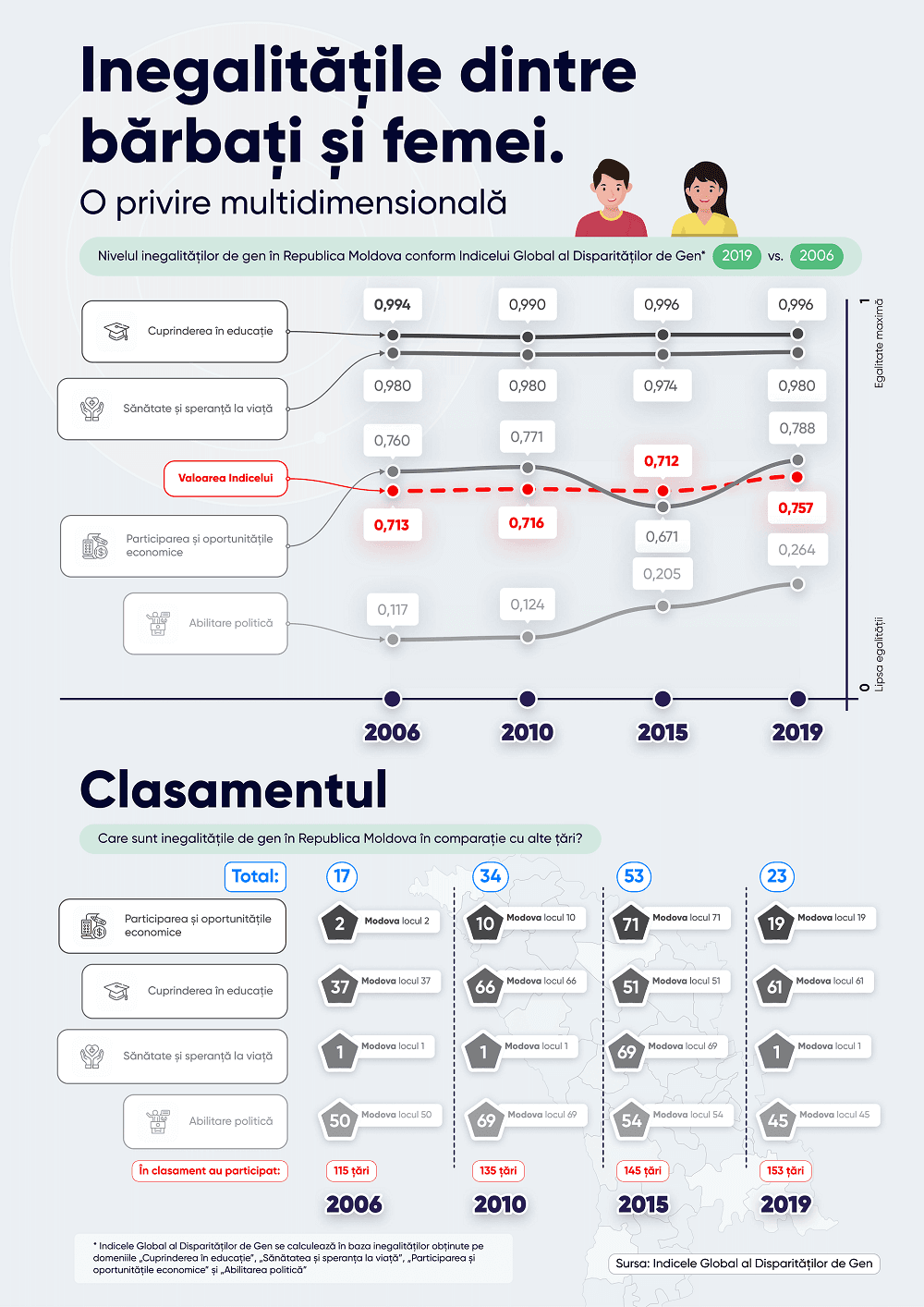
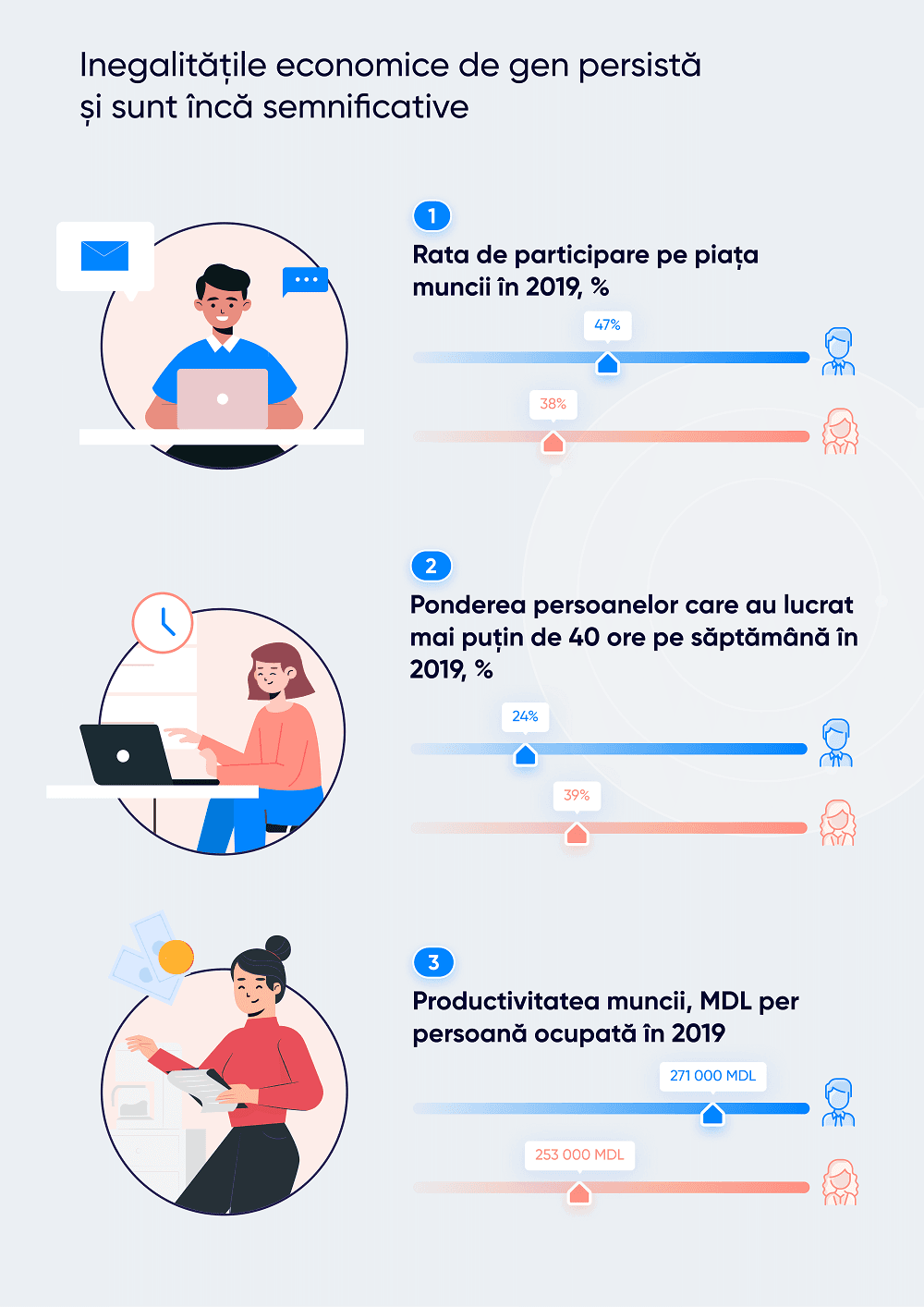
To improve matters in this area, the study offers a series of recommendations aimed at reducing gender gaps and the economic costs they generate. The recommendations concern adjustments to the legislative framework, awareness-raising and public information actions on gender equality, the role of women and men in society and the family, the reconciliation of private and professional life, and the elimination of gender stereotypes.
Other infographics & videographics
 Infographic
How the European Union Supports Local Development in the Republic of Moldova
21 July 2026
 Infographic
What should the next Government do to relaunch the economy?
8 July 2026
 Infographic
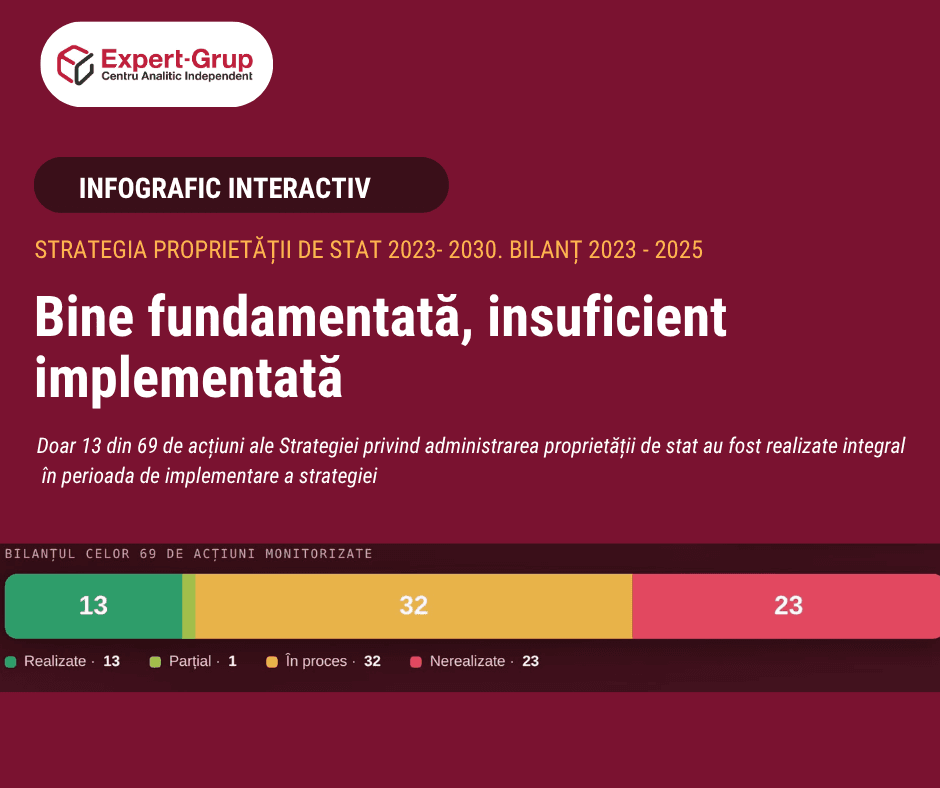
Monitoring the Implementation of the State Property Management Strategy in the Field of State-Owned Enterprises and Joint-Stock Companies
6 July 2026
 Infographic
How Should We Reorganise the Public Property Agency?
29 June 2026