
How Healthy Is the Food in the Country’s Kindergartens and Schools?

In 2016, the State Budget will spend MDL 605 million to provide meals for children in nurseries/kindergartens, schools and other educational institutions of different profiles and levels. In this infographic we describe how healthy their food is, how well it meets nutritional norms for children, how much we pay and how much we should pay for the menus in kindergartens and schools to provide an optimal intake of nutrients. This infographic is based on the author’s calculations, on data from the “Recommendations for a healthy diet and appropriate physical activity in educational institutions of the Republic of Moldova” of the Ministry of Health, and also on the “Assessment of the pre-school education system and definition of the methodology for determining the cost of educational and child care services in the Republic of Moldova”, UNICEF Moldova, PWC Moldova, March 2016. At present, pre-school children and pupils do not benefit from a healthy and balanced diet. The current menus aim to cover calorie requirements, not necessarily their quality. In 2015, excessive consumption of groats, pasta, wheat flour and sunflower oil was recorded in the diet of children in early education institutions. The food supply in 2015 made it possible to cover pupils’ physiological needs by 62.4% for milk and dairy products, 66.6% each for vegetables, 77.2% for meat and meat products, and 79.3% for fruit. The risk factors identified have persisted for several years in institutions for children and adolescents and negatively affect the health of pre-school children and pupils. The organisation of school meals is also negatively affected by the lack of conditions for storing food products, the shortage of technological kitchen equipment or the use of outdated equipment, and the lack of staff training. Between 2012 and 2015, the share of food units in early education institutions with hot water increased from 59% to 71.8%. 74.9% of food units in early education institutions have mixed sections for the preliminary processing of meat and vegetables. A similar situation is recorded in primary, lower secondary and upper secondary institutions, where the share of those with running hot water rose from 51% in 2012 to 71.9% in 2015, and 62.4% of institutions have shared sections for the preliminary processing of meat and vegetables.
Other infographics & videographics
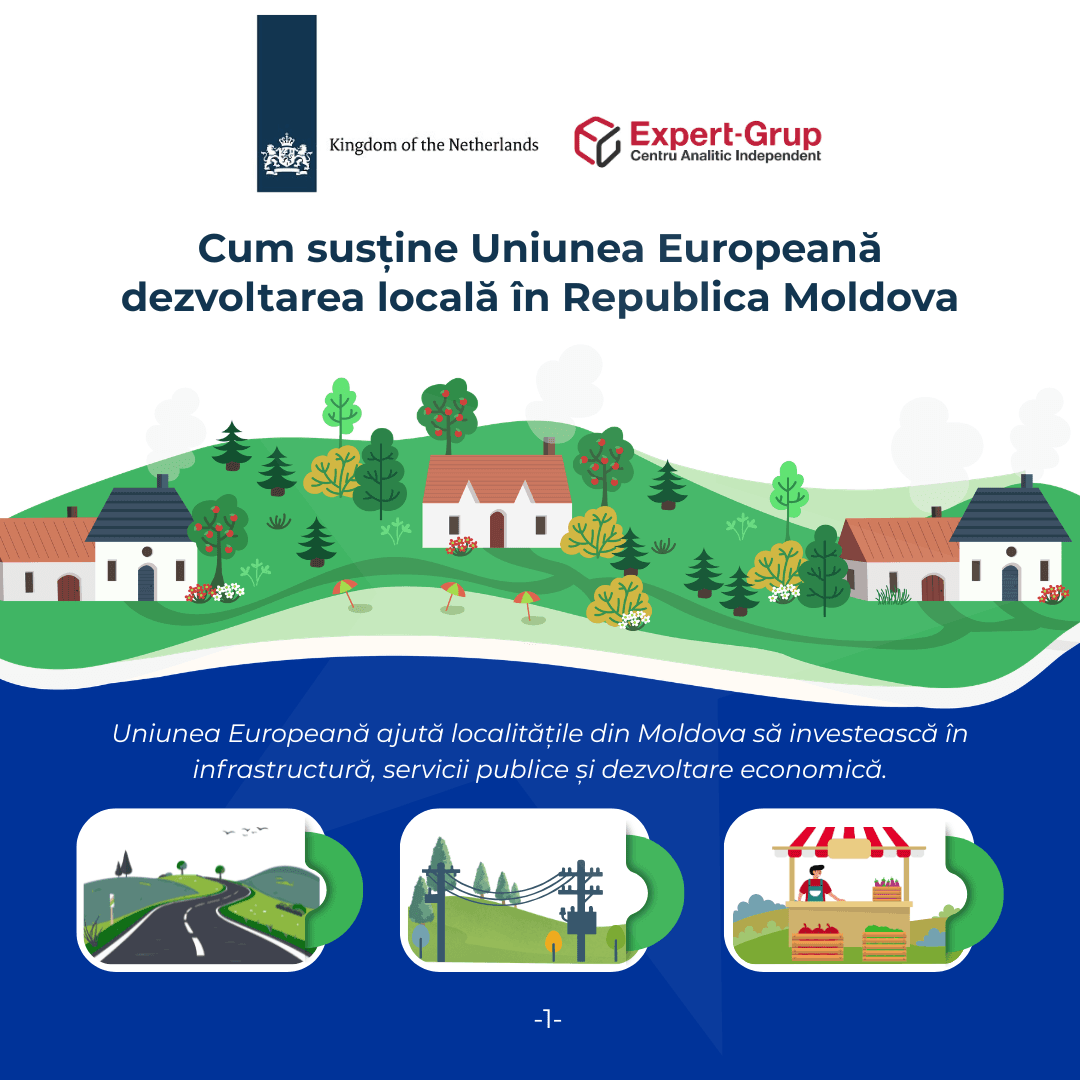 Infographic
How the European Union Supports Local Development in the Republic of Moldova
21 July 2026
 Infographic
What should the next Government do to relaunch the economy?
8 July 2026
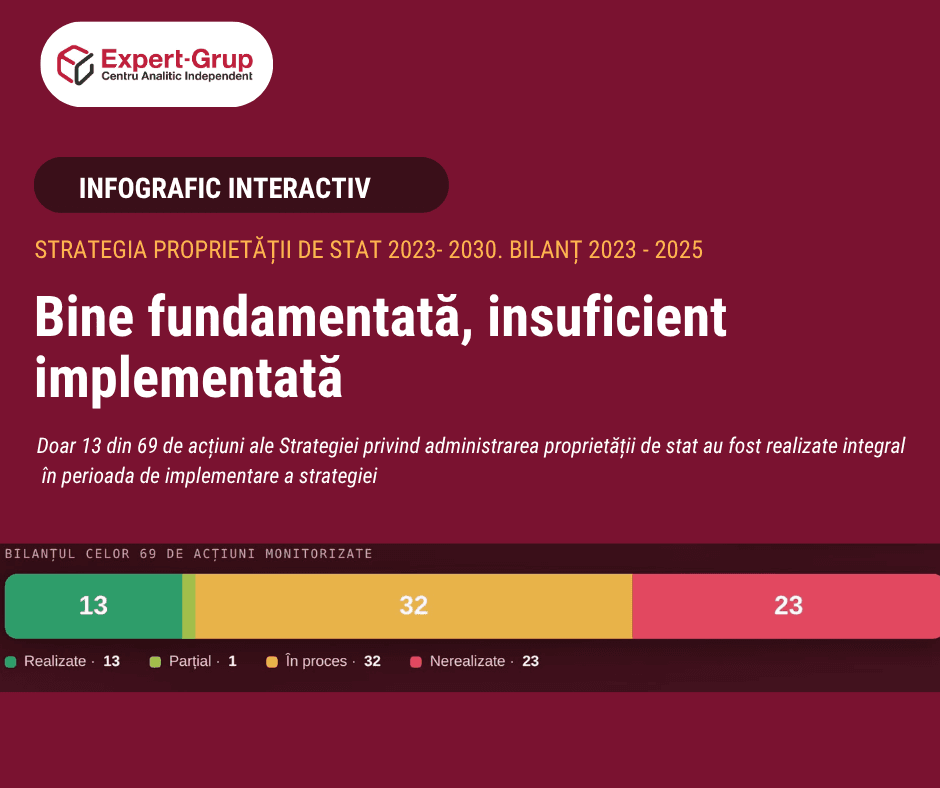 Infographic
Monitoring the Implementation of the State Property Management Strategy in the Field of State-Owned Enterprises and Joint-Stock Companies
6 July 2026
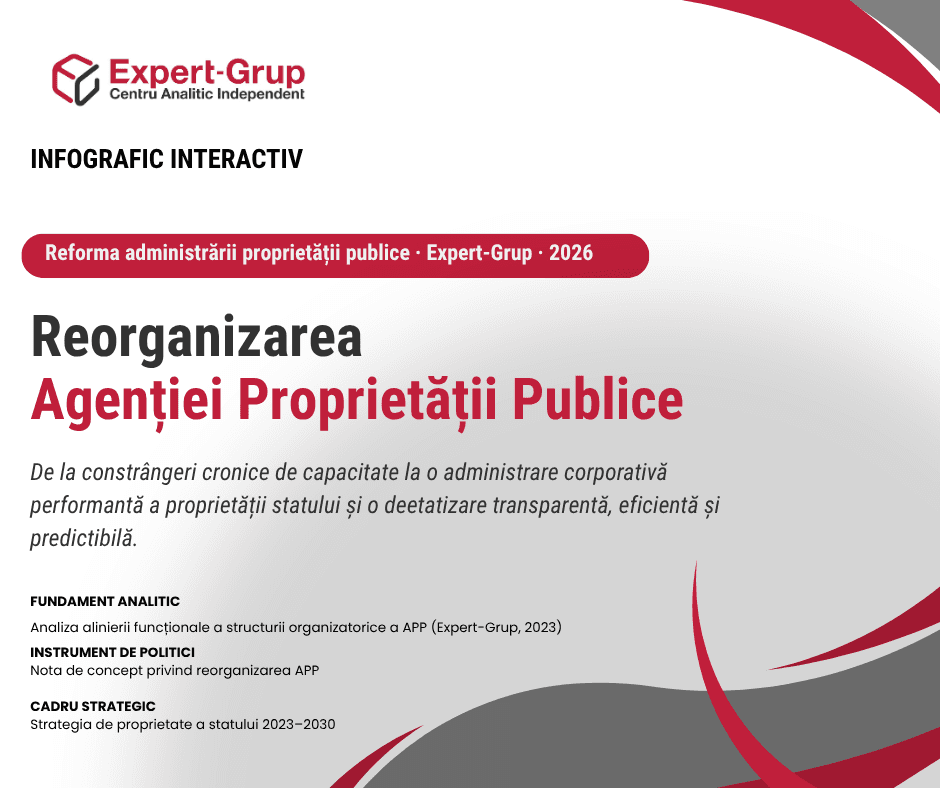 Infographic
How Should We Reorganise the Public Property Agency?
29 June 2026