Problems in the Banking Sector Have Left Their Mark on the National Budget
Automatically translated summary. The full article is available in Romanian.
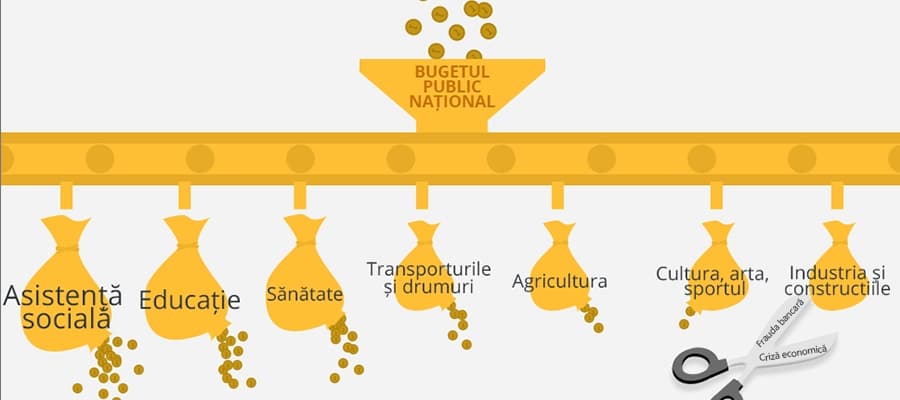
A new study by the Independent Think Tank “Expert-Grup” analyses how recent macroeconomic developments and banking-sector problems affect Moldova’s National Public Budget. It concludes that the current economic downturn is driven mainly by domestic factors, above all the banking crisis, rather than by external ones.
According to the study, poor management by the National Bank of Moldova led to an excessive depreciation of the leu, while weak supervision caused instability. Inflation and credit costs rose, real household incomes fell and imports declined. For 2015, tax revenues could fall by about MDL 1.5 billion (3.5% of planned revenue), mainly because imports dropped 21.7% to USD 4.16 billion. Import VAT falls by MDL 1.35 billion, excise duties by MDL 333 million and customs duties by MDL 186 million. Unlikely resumption of World Bank and EU financing would add a gap of over MDL 2.1 billion (4.6%).
If state guarantees to the National Bank are activated in September 2015, extra spending would be about MDL 570 million; the full ten-year cost is about MDL 13 billion if loans are fully recovered. In a pessimistic scenario, public debt peaks near 50% of GDP in 2018, about 12 percentage points below the 62% threshold, keeping Moldova at moderate insolvency risk, though a sharp growth slowdown could raise it to “strong”.
Other articles in the same category
See all
Ceadîr-Lunga Launches Its Third Municipal Bond Issue, Raising MDL 8 Million for Local Projects

24 Municipalities from the Republic of Moldova Complete a Study Visit to the Kingdom of the Netherlands

Winners of Tulip Business Incubator 3.0 Announced: Five Businesses to Receive EUR 5,000 Grants and Mentoring