Despite Some Progress in Reforming the Banking Sector, the Major Vulnerabilities That Caused the Banking Crisis Persist
Automatically translated summary. The full article is available in Romanian.
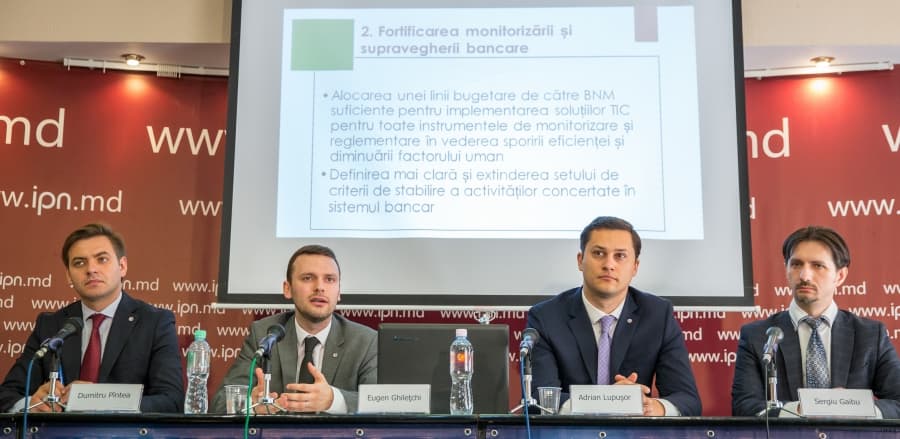
At a press conference, the Independent Think Tank “Expert-Grup” presented its assessment of how the authorities have implemented its recommendations for consolidating Moldova's banking sector. It found moderate progress: of 35 recommendations, 9 were implemented, 15 partly or in progress, and 11 not implemented. It also presented a bank shareholder transparency rating.
The main gains were in strengthening the independence of the National Bank of Moldova, making bank managers accountable, banks' loss-absorption capacity and corporate governance. Still pressing are exposure to off-shore companies, the shareholding of some banks and supervisory capacity. Eugen Ghilețchi noted preparation for Basel III, but also gaps, including weak rules on central bank loans guaranteed by the Government, dismissal of the National Bank's management by a simple majority of MPs, the delayed reform of the National Committee for Financial Stability, multiple board memberships and weak deposit guarantees.
In the third edition of the shareholder transparency rating, only Moldindconbank moved, up one place compared with July 2016, after National Bank measures against some shareholders. Dumitru Pintea recommended publishing the ultimate beneficial owners. Sergiu Gaibu urged a multilateral risk assessment of the draft anti-money laundering law and a review of the governance of the responsible Service.
Other articles in the same category
See all
Ceadîr-Lunga Launches Its Third Municipal Bond Issue, Raising MDL 8 Million for Local Projects

24 Municipalities from the Republic of Moldova Complete a Study Visit to the Kingdom of the Netherlands

Winners of Tulip Business Incubator 3.0 Announced: Five Businesses to Receive EUR 5,000 Grants and Mentoring