Although political clientelism is evident in the distribution of public financial resources, the phenomenon tends to diminish
Automatically translated summary. The full article is available in Romanian.
A study on political clientelism in the management of public funds, presented online on 16 November by the Independent Think Tank “Expert-Grup” with its partners, finds that budget allocations from central to local level are still influenced by political affiliation, although the practice is weakening.
According to the State Budget for 2021, localities led by mayors from the governing parties receive inter-budgetary transfers 40.2% larger than those with unaffiliated administrations. Political affiliation is statistically significant, especially for capital expenditure transfers. The aggregate clientelism index rose from 2.3 in 2018 to 2.7 in 2019, then fell to 1.1 in 2020 and 1.4 in 2021.
Authors link the decline to the 2020 presidential and 2021 early parliamentary elections, when the government spread funding across as many localities as possible. Stanislav Ghilețchi noted that capital transfers are poorly regulated, whereas other transfers follow clear rules based on population, area or road length. Speakers called for budget transparency and stronger local autonomy. The project is co-funded by the EU and the Konrad Adenauer Foundation.
Other articles in the same category
See all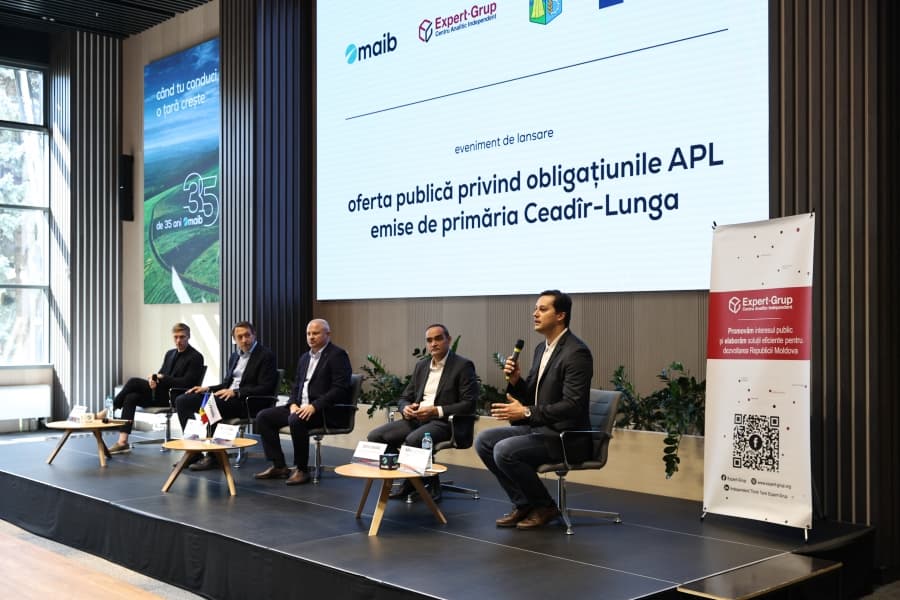
Ceadîr-Lunga Launches Its Third Municipal Bond Issue, Raising MDL 8 Million for Local Projects

24 Municipalities from the Republic of Moldova Complete a Study Visit to the Kingdom of the Netherlands

Winners of Tulip Business Incubator 3.0 Announced: Five Businesses to Receive EUR 5,000 Grants and Mentoring