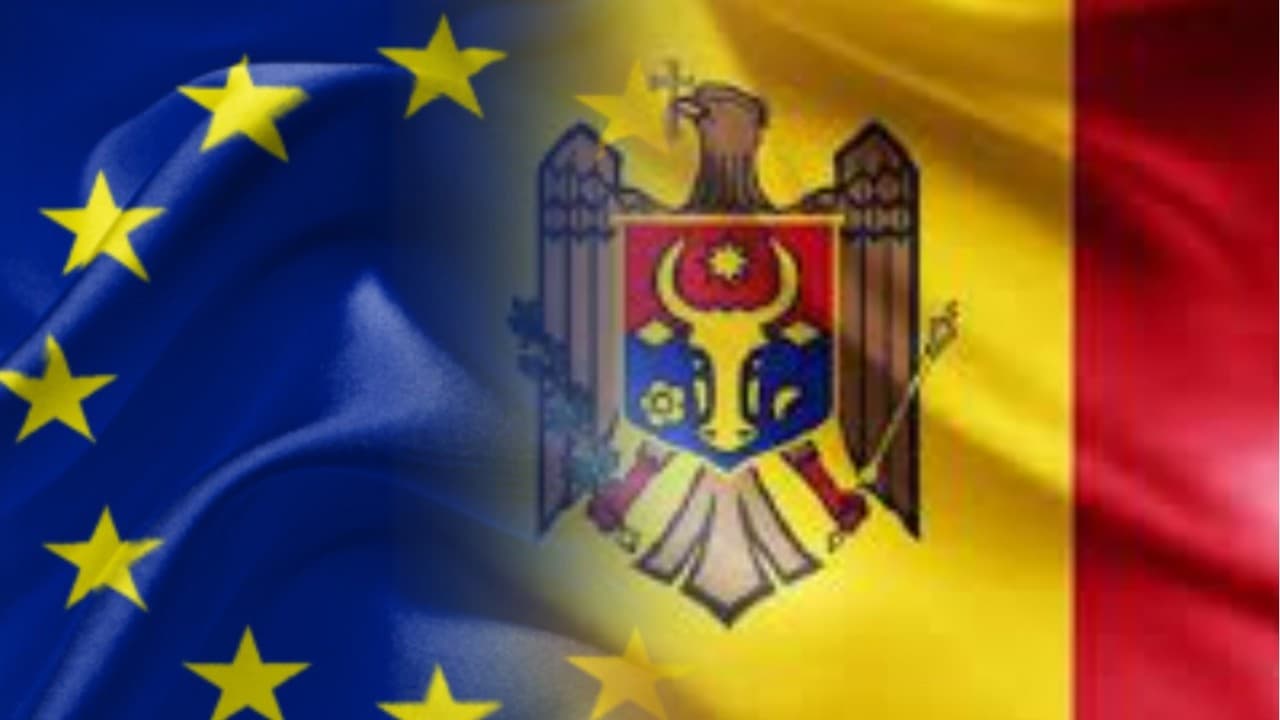
Deepening EU - Moldovan Relations
Authors

This Handbook seeks to explain the contents of a long and complex legal treaty – the Association Agreement, which includes a Deep and Comprehensive Free Trade Area (DCFTA) – between the Republic of Moldova and the European Union (EU). Like most complex legal texts, it cannot be read like a book. Therefore, the purpose here is to make it possible for anyone to understand what each chapter of the Agreement means, in terms of both the nature of the commitments that the parties take on and the prospects for their implementation.
The first edition of this Handbook was published in 2016, updated by a second edition in 2018. This third 2021 edition moves way beyond explaining the Agreement, and how it is being progressively implemented. In particular much of the EU’s legislation covered in the original agreement has been drastically revised, and supplemented by new legislation. In addition new or much enhanced policy domains have emerged, such as for public health (Covid-related), cyber security, gender and the emerging Green Deal. Also there is much debate about forward-looking ideas. All these topics are now covered in this much revised third edition.
The Handbook has in mind a broad range of readers, including officials, parliamentarians, business leaders, lawyers, business consultants, think tanks, civil society organisations, university teachers, trainers, students and journalists.
The 30 chapters in this Handbook are mainly the same as those in the Agreement, but are not identical. Some chapters of lesser interest in the Agreement are not covered here, and there is some rearrangement of the various chapter headings.
The present Handbook is one of a trilogy that covers very similar but not identical agreements between the EU on the one hand, and Georgia, Moldova and Ukraine on the other. All three books are available electronically for free downloading in English and the respective languages of the three countries at www.3dcftas.eu.
There are some references in the Handbook to an Association Agenda, which is a document drawn up jointly by Moldova and the EU, reviewing progress in implementing the Association Agreement, and which usefully provides updating and some greater detail on various topics. The Agreement and Agenda are thus not to be confused. The official texts of both documents are also available in English and Romanian at www.3dcftas.eu.
A much shorter version of the first edition of the book is available, with the aim of reaching a wider readership, including students. This version is also available online for free downloading in English, Romanian and Russian at www.3dcftas.eu.
The Handbook has been prepared by two teams of researchers and experts, from CEPS in Brussels and Expert-Grup in Chișinău. Established in 1983, CEPS is a leading think tank on European affairs, with a strong in-house research capacity and an extensive network of partner institutes throughout the world. Its mission is to produce sound policy research leading to constructive solutions to the challenges facing Europe.
The Expert-Grup is an independent think tank, specialising in economic and policy research. Its core activities are economic analysis, forecasts and policy research.
While much of the content of the Handbook is undoubtedly rather dry, we hope that the reader will appreciate the lighter touch in the artwork of Constantin Sunnerberg, which graces the book’s cover and the introductory page of each chapter.
Thanks are due to Deborah Mulhearn, Margarita Minkova and Jackie West for their editorial assistance.
Finally, the authors are most grateful to the Swedish International Development Agency (Sida) for their support and funding for the project, and in particular to Mirja Peterson and Maria Liungman for their encouragement from the beginning, and subsequently Sanna Leino and now Rolf Büchel.
The views expressed in this book are entirely those of the authors and should not be attributed to CEPS, Expert-Grup, Sida or the European Union.
 Funded by Sweden
Attachments
Deepening EU-Moldovan Relations
Download PDF3.9 MB1 downloads
Recent publications from European integration
See all
Position paper. The involution of the budget process in the Republic of Moldova

Position paper on options for improving the postal voting process after the parliamentary elections of September 28, 2025

Analytical Note | European norms and regulations on the labor market. Contextual aspects of them in the Republic of Moldova