
2022 year comes with several major challenges for the population, companies and the public finance system
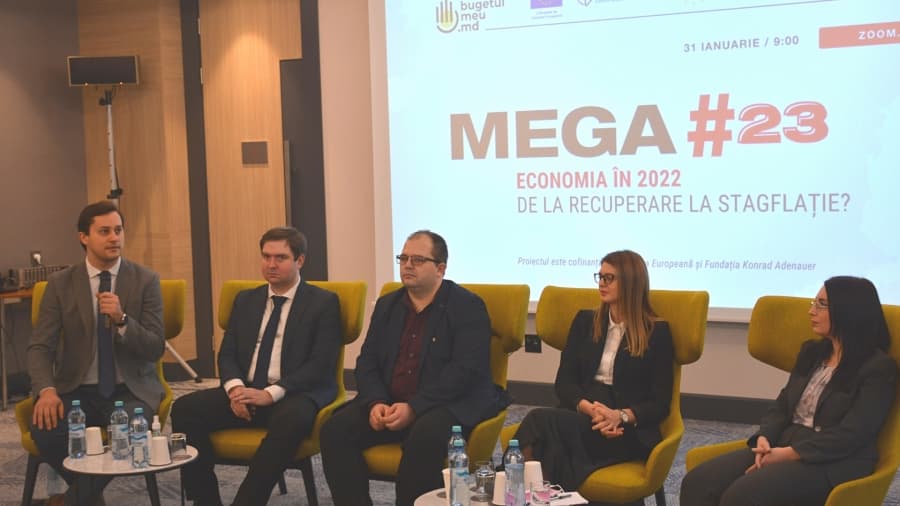
Adrian Lupușor, Executive Director, Expert-Grup stated "The economic developments in 2021-2022 reveal a number of positive and negative aspects of the Moldovan economy. The bottom line is that the economic system is quite flexible and adjusts quickly to various constraints or opportunities. Thus, after one of the worst recessions of 2020 (-7%) caused by the pandemic crisis, drought and worsening economic situation in the region, the Republic of Moldova marked one of the fastest growth in 2021 on the background of the improving economic conditions in the region, of a favorable agricultural year, the improvement of the pandemic situation, but also the stabilization of the political situation which unblocked several investment processes and stimulated the relations with the development partners. However, we are once again convinced of how vulnerable the country's economy is to various shocks. Thus, due to rising import prices (especially on the background of the global energy crisis), but also a high benchmark given the record economic growth of 2021, the 2022 year could bring us not only the cooling of economic engines, but also stagflation: recession or anemic economic growth along with high inflation. Given the forecasts and challenges for 2022, we need more than ever to improve inter-agency coordination to ensure a mix of policies that will temper inflationary expectations through a balanced anti-inflationary monetary policy, a stimulating budgetary policy and an economic policy. to give investors and the public confidence in the country's macroeconomic outlook ”.
Juric Josip, Program Manager, EU Delegation to the Republic of Moldova mentioned “I would like to emphasize that I have always considered that citizens need to be actively involved in the policy making process, but most of the time citizens are not experts to analyze different areas therefore this role belongs to the think tanks that can provide relevant, credible analyzes. The MEGA #23 publication launched today is the necessary analytical tool with which we can empower and inform citizens, donors, decision makers about how they can contribute to long-term economic development".
According to experts, the year 2021 was marked by a strong acceleration of inflationary trends, both in the Republic of Moldova and around the world. Among the main risks that could undermine recovery and growth in 2022 are:
- The energy crisis has created an extremely financial-economic context with a negative impact on companies, especially the impact on households and public administration;
- Further increase in energy prices will exacerbate inequalities and impact on the lowest income population;
- Budgetary risks may intensify in 2022. The government has assumed a substantial budget deficit for 2022 (about 6% of GDP);
- A significant risk is also due to the rapid increase in the indebtedness of the state (although the level of state debt remains at an acceptable level);
- Pandemic risk, given the new waves of COVID-19 infection and the emergence of new viral strains that could lead to new restrictions with major economic repercussions.
Regarding the main forecasts for the coming years, the authors of the MEGA publication, 23rd edition anticipate:
- The forecasts for 2022 anticipate a moderate increase in GVA of 2.6% and GDP of 2.8%, in a context with extremely high risks;
- In 2021 the final consumption increased by an estimated 8.8%, and for 2022 and 2023 the forecast is a slower increase - 4.3% and 3%, respectively. In addition to increasing incomes, another factor that will contribute to the increase in consumption in 2022 and 2023 refers to the expansion of consumer loans granted to individuals;
- In 2022 and 2023 the incomes of the population will continue to grow, but at a slower pace than in 2021. Estimates show that in 2021 real wages increased by 8%, and for 2022 and 2023 increases of 7.2% and 7 are anticipated, 8%;
- For 2022, financial intermediation will continue the upward trend, with an increase in new loans of about 20%. Lending to the SME sector will be stimulated by state credit guarantee programs.
- In 2021 the average pension increased, estimated, by 7% in real terms, and for 2022 and 2023 it forecasts an increase of 4.3% and 7.7%, respectively;
- Increasing financing by development partners and foreign direct investment inflows;
- For 2022, the risks to the current account will remain high, against the background of persistent inflation and relatively modest economic growth;
- The trade and transport sectors will have the most important contribution to the positive dynamics of the economy in 2022. After an estimated 3.3% increase in GVA in transport in 2021, the anticipated increase for 2022 is 3.4%;
- Anticipations on inflationary dynamics are quite pessimistic and for 2022 there is an average annual increase in prices close to 14%. However, that momentum is set to reverse by the end of 2022, and in 2023 the inflation growth rate will return to the range set by the central bank.
In this context, Expert-Grup comes with a series of recommendations to the Government, namely:
- The Republic of Moldova needs to ensure better budgetary governance and increase the efficiency of public spending, especially in the context of the new memorandum wirh IMF;
- In the short term, measures to support the socially vulnerable layers affected by inflation remain necessary, and in the medium term - a transition to a more redistributive taxation;
- The government must stimulate not only the creation of new companies, but also the return to business of entrepreneurs who want to take new risks after they have failed, the continuous maturation of SMEs, including their growth as an economic dimension, increasing the internationalization of their development of managers' skills and the integration of local companies in the value chains of large foreign investors;
- There is an urgent need to implement major projects to connect the national energy system to the European one. Stimulating the substantial increase in domestic energy production capacity and possibly a restructuring of consumption through a stronger transition to electricity;
- Strengthening the structural component in the arsenal of macroeconomic policy - namely, strengthening independent regulators, ensuring fair competition, preventing and eliminating monopolistic arrangements;
- Cautious management of public debt and elimination of sources of chronic waste from the public finance system (strengthening governance in state-owned enterprises, streamlining the management of infrastructure projects, but also in the vast majority of public institutions, etc.);
- Implementing a "more optimal" model of organizing local public finances and placing them in the national system, one that would ensure effective decentralization, not just a formal one.
For more details watch the recorded event.
The MEGA #23 Conference was organized as part of the third objective/pillar of the project “Inform, Empower, Act. Civil Society for good budgetary governance in Moldova”, focussed on advocating for policy change at the central level, in order to ensure an enabling environment across the entire country for budgetary transparency, participation and inclusiveness. The project is co-funded by the European Union and Konrad Adenauer Stiftung and implemented by the Independent Think Tank “Expert-Grup” as lead applicant, the Institute for European Policies and Reforms (IPRE) and the Eastern European Studies Centre (EESC) from Vilnius, Lithuania.
Other articles in the same category
See all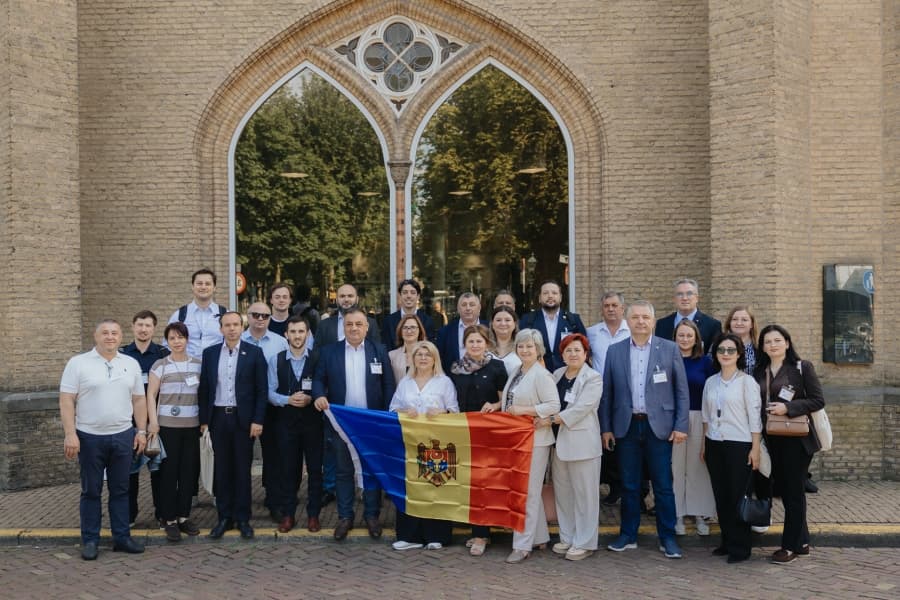
24 de primării din Republica Moldova au efectuat o vizită de studiu în Regatul Țărilor de Jos
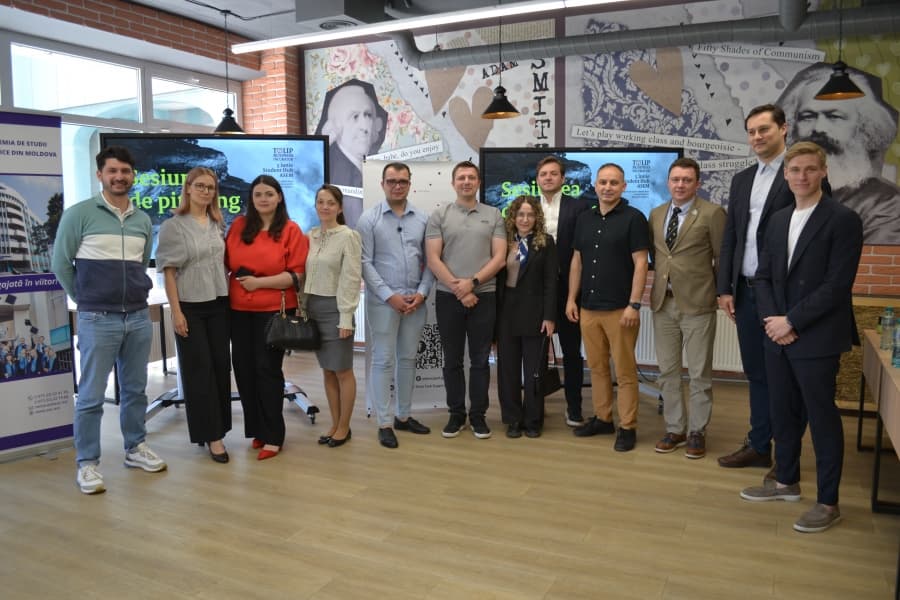
Au fost desemnați câștigătorii Tulip Business Incubator 3.0: cinci afaceri vor beneficia de granturi în valoare de 5000 euro și mentorat.
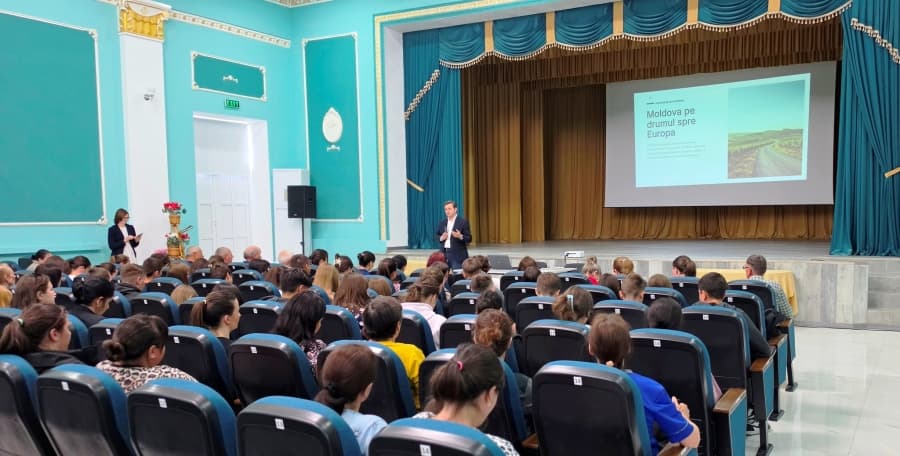
Peste 500 de persoane au participat la discuțiile publice despre integrarea europeană organizate de Expert-Grup în comunitățile locale